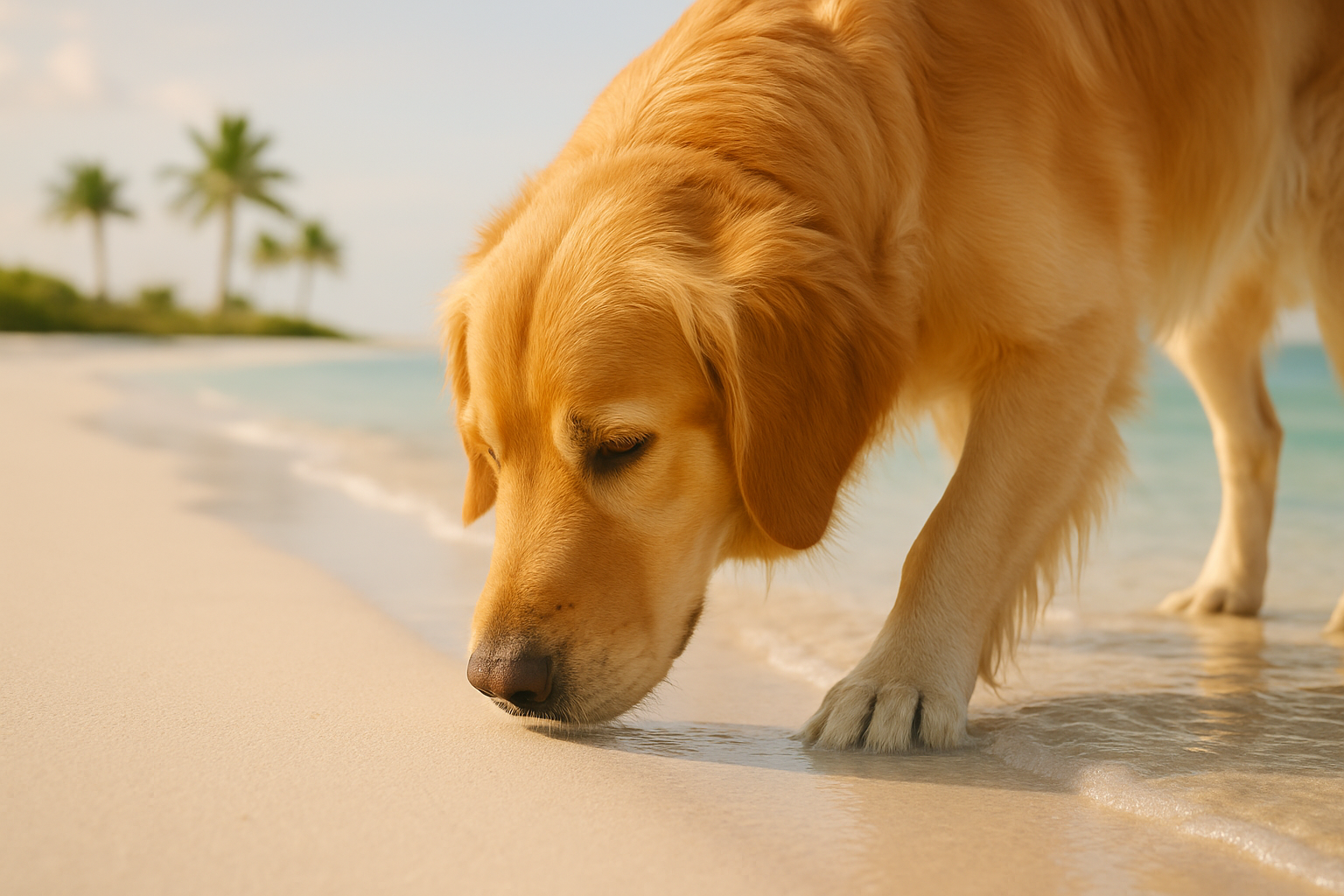
Florida beachgoers who bring their dogs along this summer should keep a close eye near the waterline. Sea hares — soft-bodied sea slugs that can look almost like they're flying as they glide through shallow water — are showing up in unusually large numbers along parts of the Florida coast, and they carry a hidden danger for pets. When threatened, these creatures release a purple ink that, while harmless to humans, can be fatal to dogs.
Mark Perry, executive director of the Florida Oceanographic Society in Stuart, says this summer has brought a notably heavy spawn. "It has been a big spawn this summer. We get one of these every year or so," Perry said. "Dogs sniffing around them or licking one can be a problem. The ink is toxic, so if a dog eats one, it can be fatal." Thousands of sea hares have been spotted lingering in the Bathtub Beach cove in Stuart on the Treasure Coast. Summer winds, high tides, and seasonal algal blooms tend to push large seaweed mats ashore, with sea hares riding along for the trip.
According to the Florida Fish & Wildlife Conservation Commission, sea hares are plant-eaters typically found in shallow seagrass beds, and they do have an internal shell despite resembling slugs. Their coloring depends on their diet — those feeding on red algae take on a reddish-purple hue, while seagrass-eaters tend to be greenish. They're hermaphroditic and often form long mating chains before laying their eggs in distinctive ruffled, ribbon-like strands. Sea hares live up to about a year and are considered an indicator species, meaning their presence and condition can offer scientists useful signals about the health of a marine environment.
If you suspect your dog has come into contact with a sea hare — whether by sniffing, licking, or eating one — veterinarians recommend seeking care immediately rather than waiting for symptoms to appear. Seizures are among the reported effects of exposure.
This story was originally reported by Timothy O'Hara for Treasure Coast Newspapers, as republished by the Boca Raton Tribune.