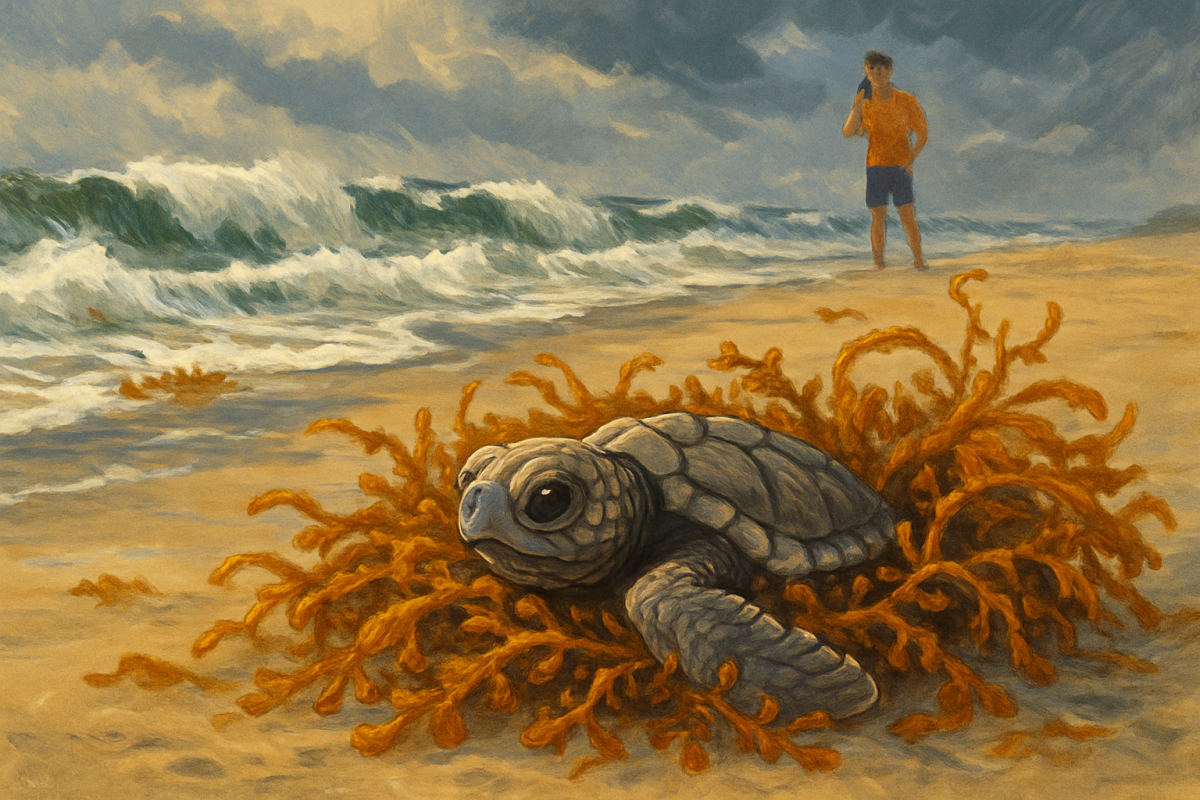
Florida beachgoers who find a sea turtle hatchling washed ashore should not pick it up or put it back in the ocean, according to the Florida Fish and Wildlife Conservation Commission.
Storms, high winds and rough surf can affect sea turtles, hatchlings and nests during the state’s nesting season. Young turtles may turn up tangled in seaweed along the shore or in unexpected places, including yards and swimming pools.
The FWC calls these stranded young turtles “washback” hatchlings. After reaching the ocean, hatchlings travel several miles toward floating vegetation that offers food and shelter. Storm-driven winds and currents can push that vegetation, including sargassum, back toward shore and carry the turtles with it.
Anyone who finds a stranded hatchling should immediately call the FWC’s 24-hour Wildlife Alert Hotline at 888-404-FWCC (3922) for instructions. Hatchlings that are actively crawling toward the ocean should be left alone, the agency said.
Sea turtles are protected as threatened or endangered species, and stranded hatchlings may require specialized care. Florida law prohibits taking, disturbing, harassing or possessing marine turtles and hatchlings without authorization; violations under the Marine Turtle Protection Act can be charged as a third-degree felony.
The same reporting number should be used for stranded, injured, trapped or dead sea turtles and hatchlings. If storms expose sea turtle eggs or wash them from a nest, the FWC asks people to leave them where they are.
Florida’s sea turtle nesting season continues through October. The FWC also asks visitors to keep beaches clear, clean and dark by removing chairs and umbrellas, filling in holes, disposing of trash and fishing line properly, and turning off lights near the beach at night.