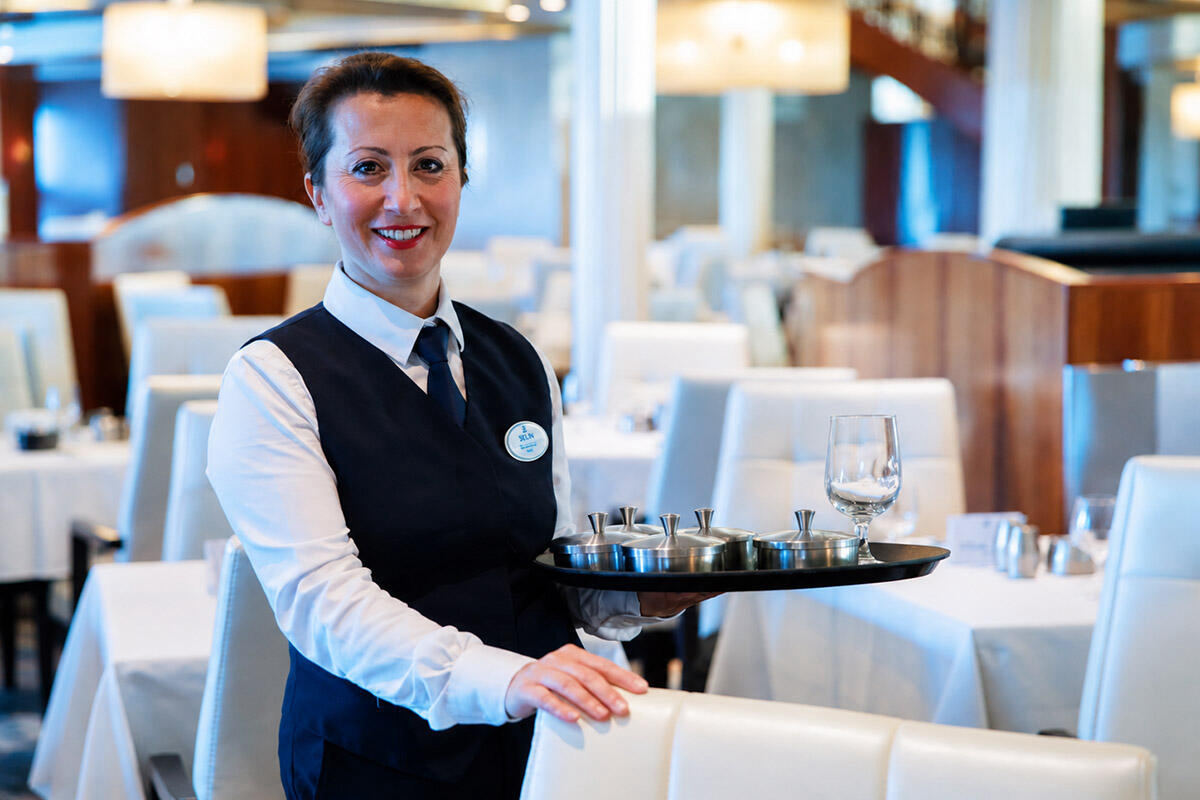
Royal Caribbean’s Main Dining Room serves a large share of guests each evening, putting waiters, assistant waiters, head waiters and maîtres d’ in regular contact with passengers throughout a sailing. On Icon of the Seas, the dining operation can serve 6,000 guests during a three-and-a-half-hour dinner period, according to Royal Caribbean Blog.
One behavior that stands out immediately, according to crew member and social-media creator Emmy Cruises, is a guest snapping fingers to get a server’s attention. She described the gesture as disrespectful and said it can lead to slower service. Dining teams are responsible for several tables at once, taking orders and coordinating with the galley before meals are delivered.
Dietary requirements are another early priority. Servers ask about allergies and other needs when guests are seated, including when a request was not included in the booking. Royal Caribbean says it can accommodate food allergies, gluten-free, Kosher, low-fat and low-sodium needs. Vegetarian choices are available in the Main Dining Room and Windjammer, while vegan menus can be requested in the Main Dining Room.
When a special need is entered in a reservation, crew members can see it in advance, and food-allergy information is available to both the waiter and chef before the guest arrives at the restaurant, the report said.
Staff can also identify returning guests through Crown & Anchor Society information on their SeaPass cards. Some cards have distinctive colors for higher-status guests or suite passengers, and Diamond, Diamond Plus and Pinnacle Club members may wear a pin or lapel badge. Royal Caribbean says the badges help its onboard team recognize returning loyalty members, though the cruise line does not say they result in faster or better service.
Finally, passenger demographics can affect what is stocked before a sailing. Royal Caribbean analyzes the mix of nationalities aboard and uses AI to help plan provisions, according to the report. A crew member cited on a galley tour said sailings with more American guests may require more chicken, reflecting anticipated dining preferences.